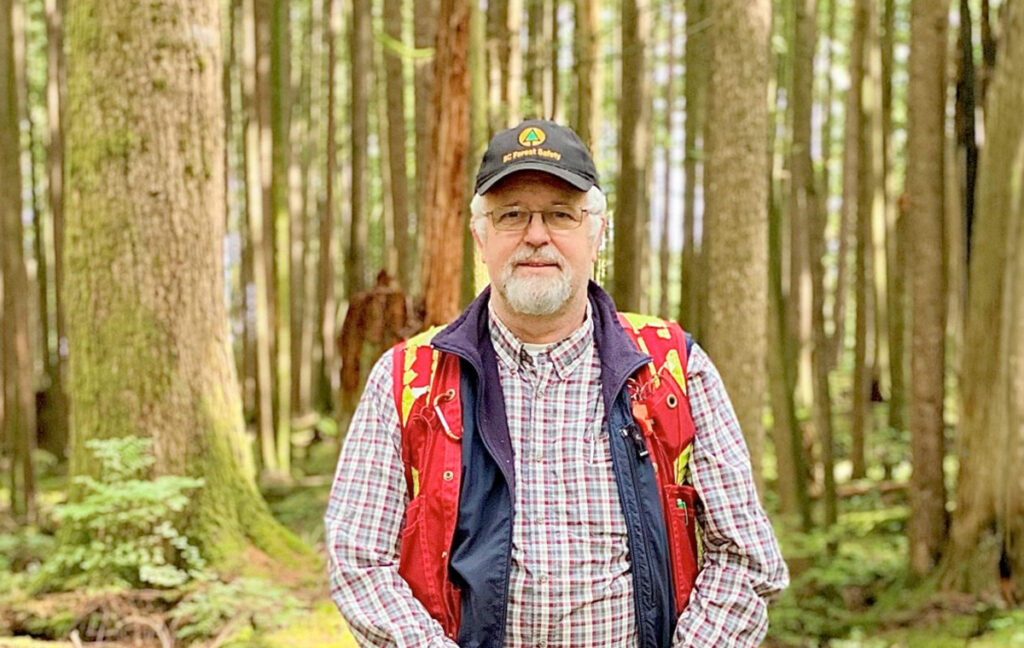

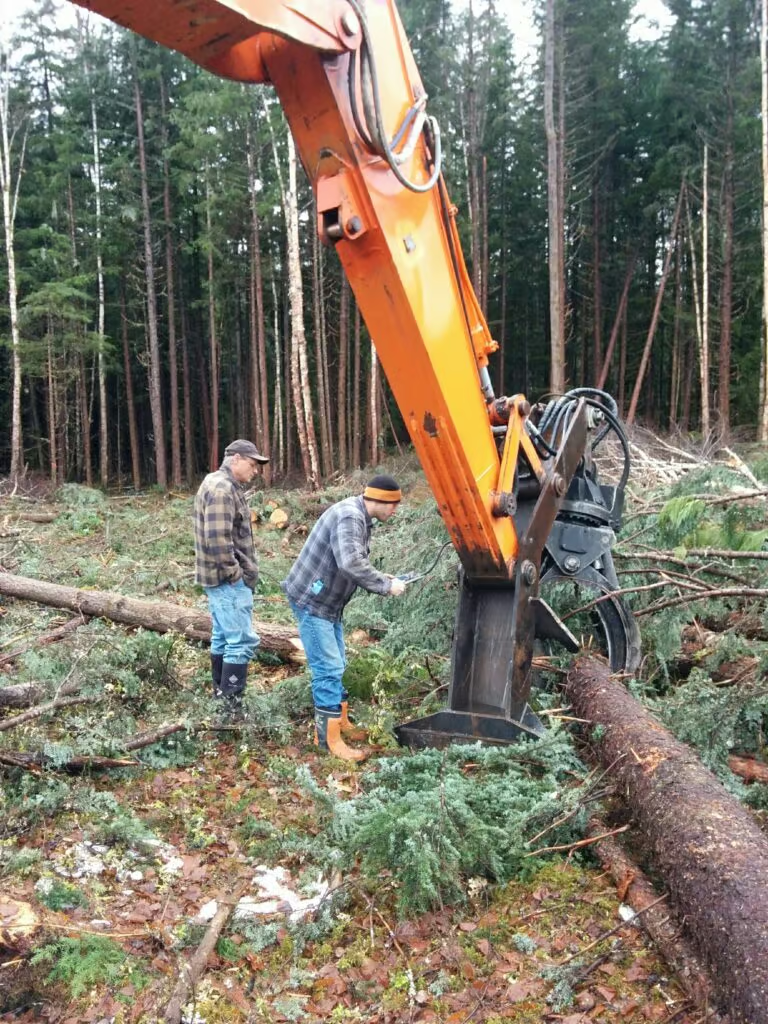
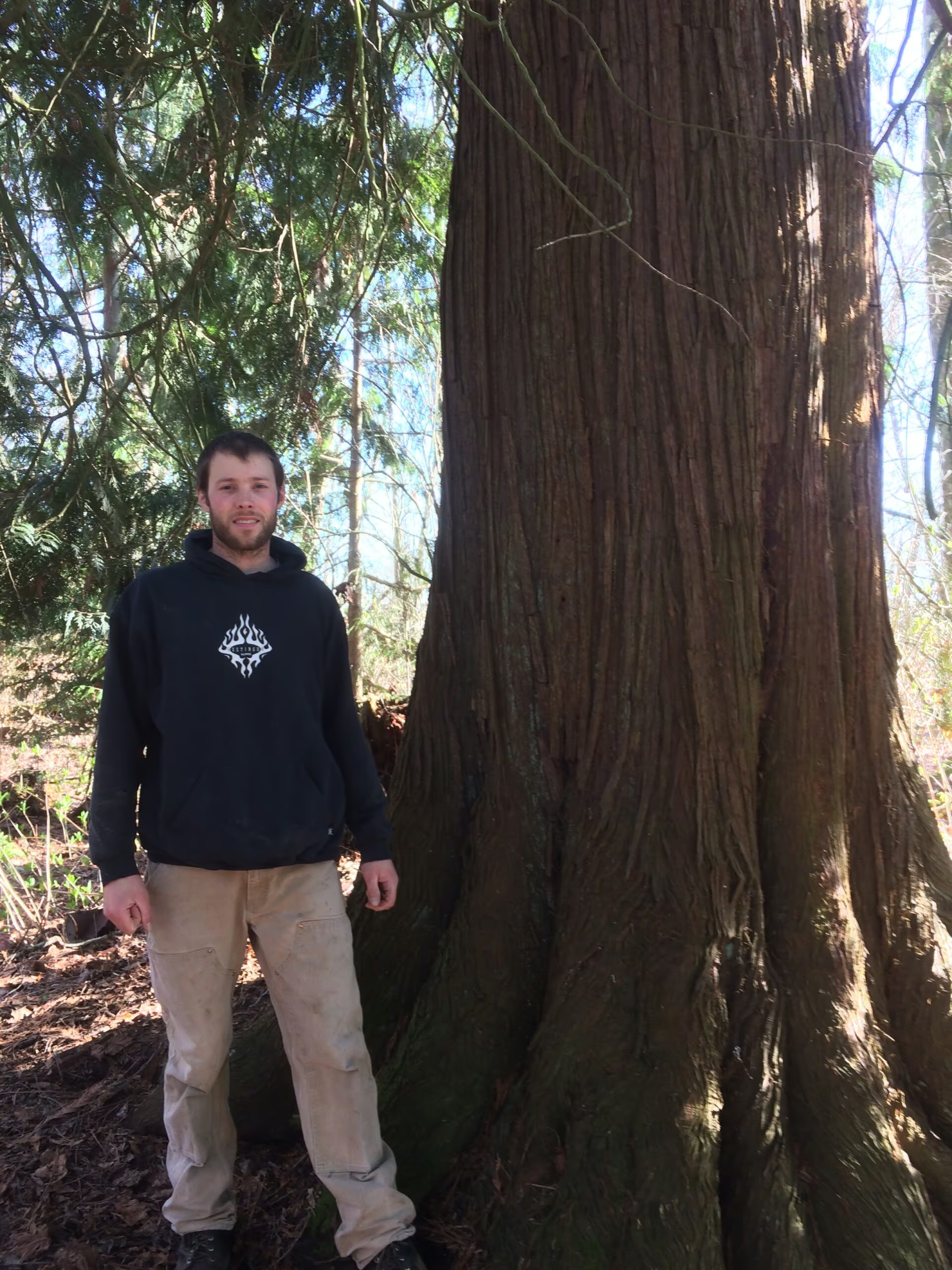
 Dan Burns is a woodlotter who lives in Smithers, BC, with his wife Kara and their three young children. Dan’s business, Roche Heavy Industries, which is named after a local mountain, is the holder of Woodlot 1711. W1711 is located near Hazelton in Northwestern B.C. and is in the Skeena/Stikine Resource District.
Originally the woodlot was awarded as W0133 in the 1980s and then taken back by the Ministry of Forests for non-performance issues. The Ministry readvertised it as W1711 and it was awarded in 1993 to a local family. It was then bought by Dan in 2017 when the owners decided to sell some of their land holdings in the area. There is no Private (Schedule A) land in W1711 although Dan owns a quarter section of land in the area.
After a 200 ha top-up area was added in 2011, and a management plan update in 2021, W1711 now has an Allowable Annual Cut of 1,570 cubic meters, and uses One CP. Before being allocated as a woodlot the area was selectively harvested for cedar poles and to supply local bushmills.
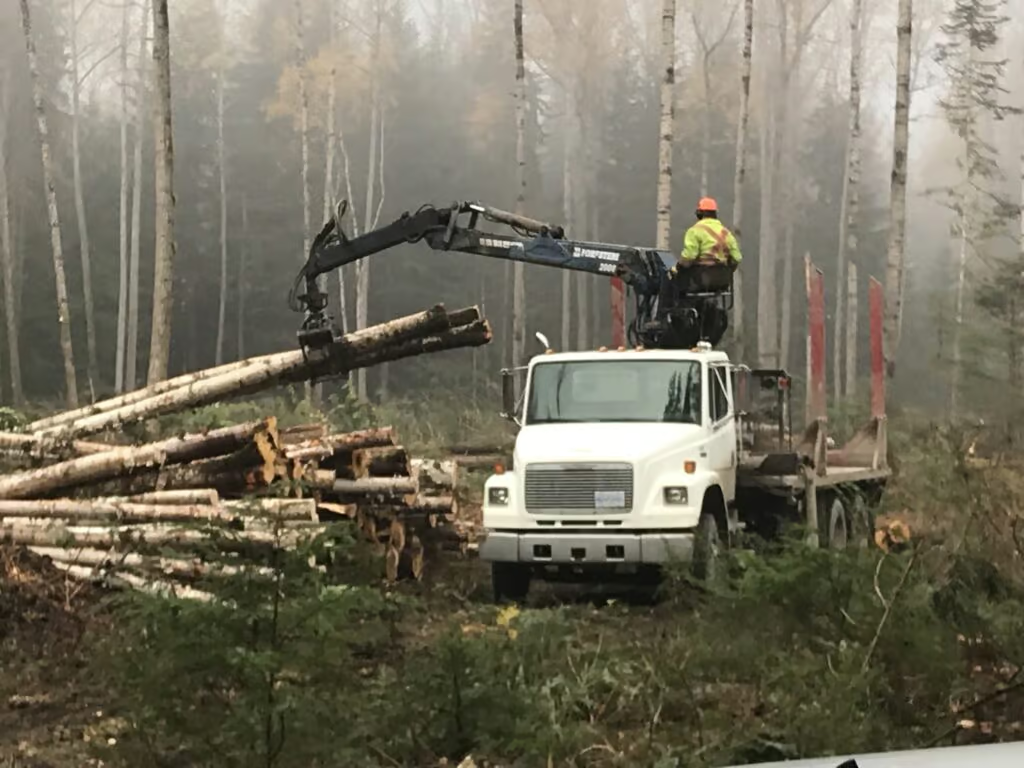
Logging is primarily market dependent. There are a few independent sawmills close by, one major licensee sawmill, and no pulp mills making for a challenging sales market at times. The woodlot is within the Interior Cedar Hemlock zone, contains almost all of the Deciduous and Coniferous species native to the area and has productive forest growing sites.
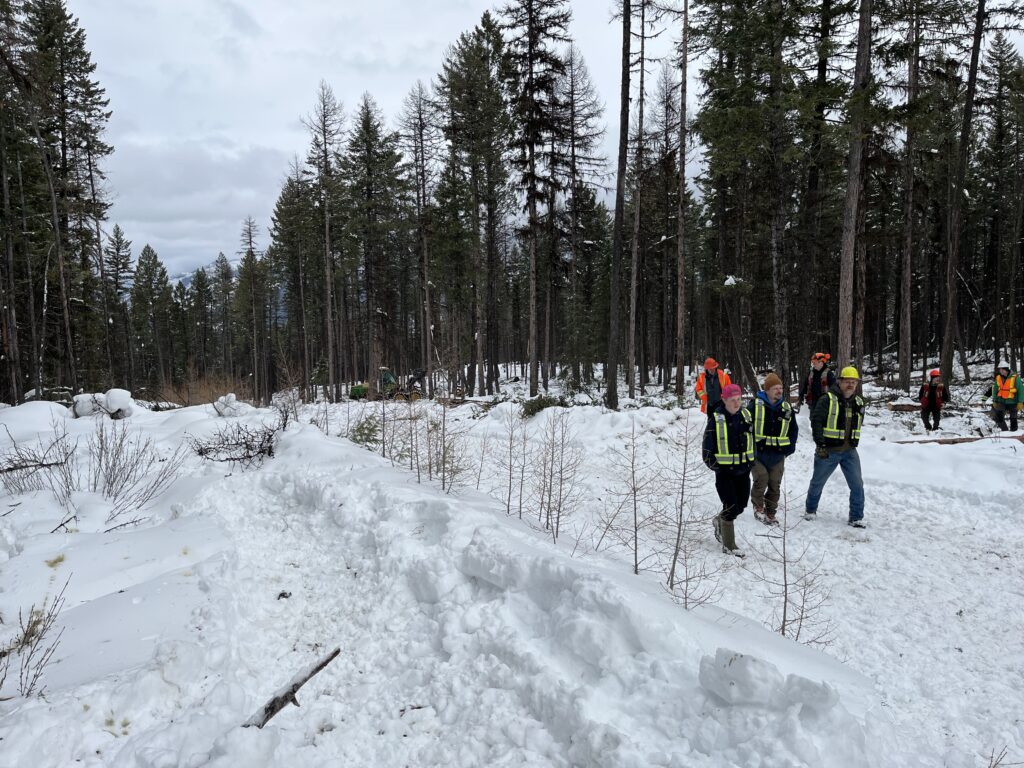
Due to the mixed stands they’ve had to seek out unique markets for some species. Cedar is sold to several local independent sawmills for custom milling and also for house logs and hydro poles. Birch is sold to a small custom sawmiller for flooring and cabinet grade lumber. Spruce, hemlock, pine, and balsam are also sold to local mills. Pulp-grade wood and low-grade birch can be sold for firewood. Dan is trying different harvesting methods, such as small patch logging, and using existing roads and skid trails whenever possible.
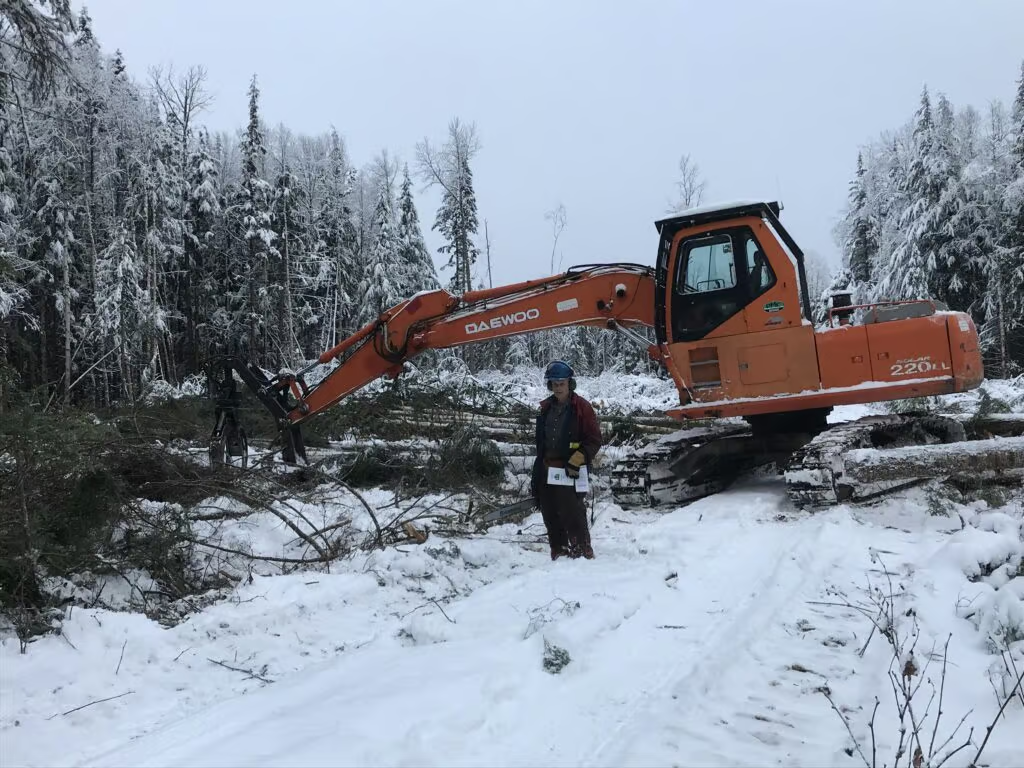
Dan and Kara grew up in forestry working families so becoming woodlotters was a natural progression. Dan’s father is an RPF who worked for the Ministry of Forests in Hazelton and as a logging contractor. Kara’s father worked in Cranbrook for the Ministry of Forests and as a forestry consultant. Dan worked in many forestry related jobs before starting his heavy equipment repair and maintenance business. Kara is employed by the Ministry of Environment as a Biologist. They became woodlotters to further their experiences in resource management outside of work.
 Some initial challenges with the woodlot were administrative issues which they have worked hard to correct to meet current Ministry obligations. Hiring local loggers can also be difficult due to the absence of a qualified workforce. They employ a local forestry consultant and loggers. There is some blowdown due to spruce beetle attacks and root rot issues. Harvesting is targeted to salvage these stands when possible. Staff turnover in the District office has been a problem in the past with 90 woodlots to manage.
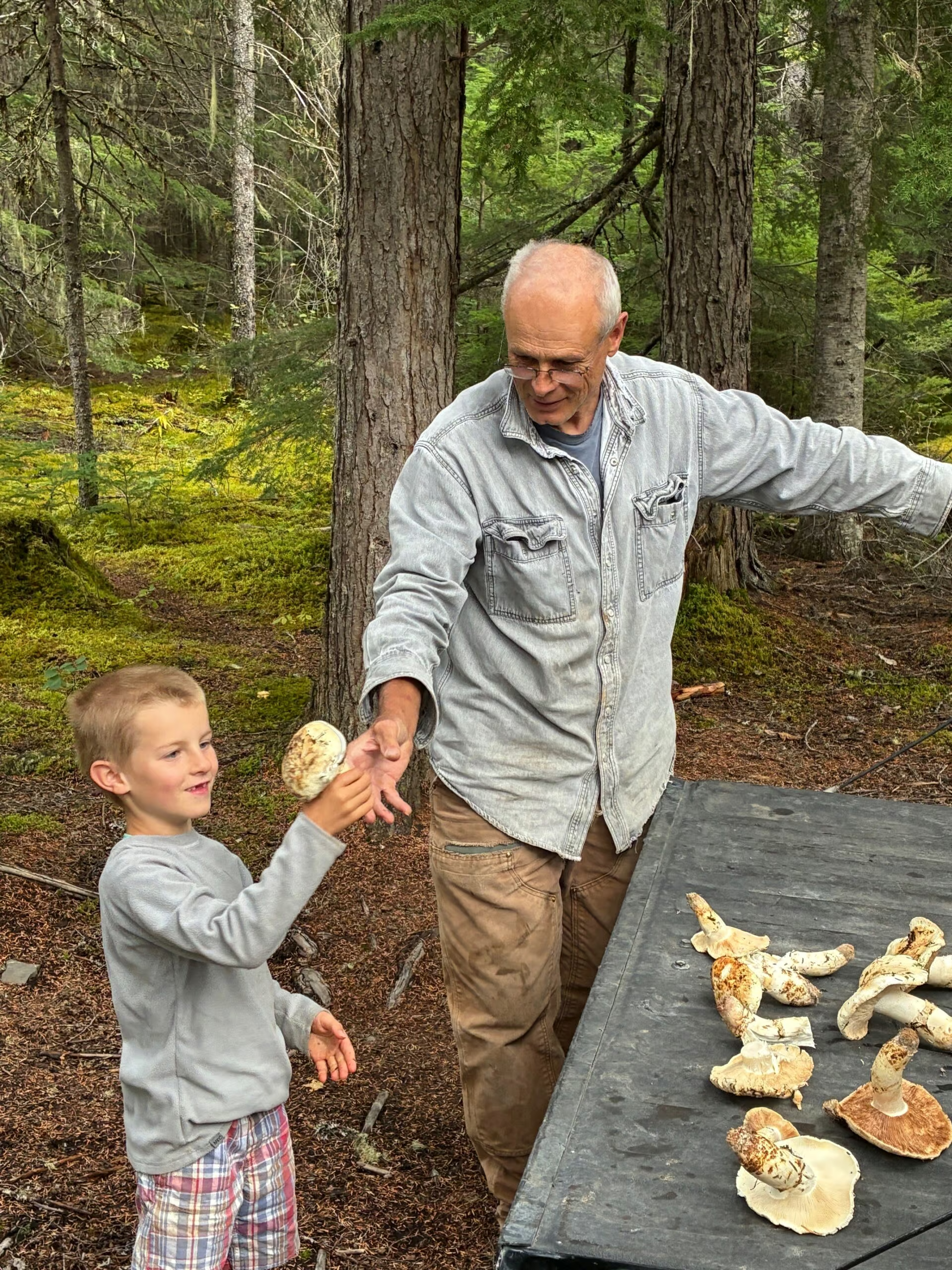
The woodlot is close to town and as a result there are lots of recreational users, firewood cutters, and local and commercial mushroom pickers that use the area. They have been careful to work cooperatively with the various users and try to ensure that any issues are dealt with proactively. There is about 10 hectares of Old Growth mostly in sensitive areas which hasn’t posed issues yet. There are traditional and current First Nation’s uses on the woodlot and overlapping traditional territories. They maintain open communication with local members about woodlot operations.
Moose, deer, bears and furbearers call the woodlot home and a salmon-bearing river borders part of the woodlot. Favourite memories include spending time on the woodlot picking mushrooms, ATV’ing and viewing wildlife with their family. Dan recalls their first time planning a harvest with his father’s help as he had local knowledge of previous harvesting and silviculture practices that work well in the area.
Spend as much time as possible walking around your woodlot – you can learn something new every day.
Their future goals include successfully operating the woodlot while promoting good forest management to the local community. Dan and Kara want to be able to pass it on as a well-managed woodlot to their family.
Dan and Kara’s advice to new or prospective woodlotters is to be aware of the existing obligations for the woodlot by doing your homework. Hire good local consultants and logging contractors. Treat challenges as opportunities to learn and talk to other woodlotters in the area and provincially for advice. Plan ahead before harvesting operations commence to ensure a better chance for successful operations. Lastly, spend as much time as possible walking around your woodlot where you can learn something new every day.
Article written by John McClary